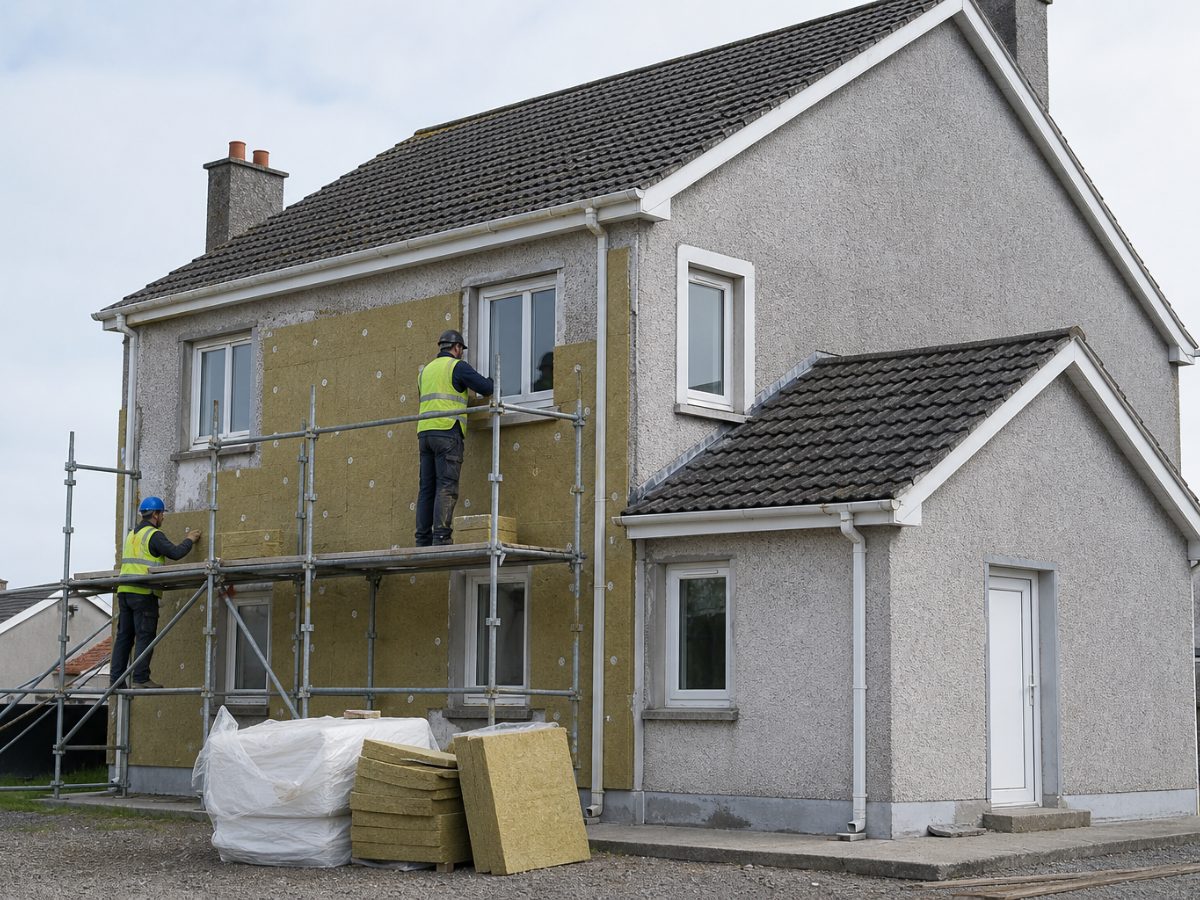
A home retrofit is essentially an energy upgrade. You take the house as it stands and make it cheaper to heat, more comfortable to live in, and less wasteful overall. In Ireland that usually means tackling insulation, heating systems, windows and sometimes renewable energy like solar panels. It matters more than it used to, partly because energy bills have climbed sharply, but also because BER ratings now carry real weight when you're selling or renting. A house sitting at a D or E rating is increasingly harder to shift, and buyers are asking harder questions about running costs than they were even five years ago.
If you've landed here looking for a quiz, this article will do the same job. Work through the questions below honestly, note your answers, and by the end you'll have a clear sense of where your home sits and what to do next.
Section 1: Quick Self-Assessment Checklist
Go through each area and give yourself a rough score. For each question, mark yourself 0 (already sorted), 1 (partial or uncertain) or 2 (definitely a problem).
Age and construction of your home
- Was your home built before 1980? Older builds almost always have poor insulation and single-skin or uninsulated cavity walls.
- Is it a solid-wall property, a cavity wall build, or a timber frame? Solid walls, common in pre-1940s homes, are the most expensive to insulate properly.
- Has any significant energy upgrade work been done by a previous owner? If you're unsure, that likely means no.
Heating system
- Are you still on an old oil or gas boiler? If it's more than 15 years old, efficiency will have dropped noticeably.
- Do you have radiators throughout, or a mix of storage heaters and electric panels? Electric panel heaters are expensive to run.
- Is your hot water heated by the same boiler, or by an immersion tank alone?
Insulation
- Do you know whether your attic has insulation, and roughly how deep it is? The current recommended depth is around 300mm. Anything under 100mm is effectively poor.
- Are your external walls insulated, either internally or externally?
- Is there insulation under the ground floor, particularly if it's a suspended timber floor?
Windows and doors
- Do you have single-glazed windows anywhere in the house?
- Can you feel draughts around window frames, external doors or the letterbox?
Ventilation
- Do you have condensation or damp patches on walls, particularly in bedrooms or bathrooms?
- Is there any mechanical ventilation, or does the house rely entirely on opening windows?
Section 2: Reading Your Results
Add up your score from Section 1.
0 to 4: Your home is in reasonable shape. You may still benefit from targeted upgrades, but you're not starting from scratch. Focus on the heating system if it's ageing.
5 to 10: Medium priority. There are meaningful gaps that are likely costing you on bills and comfort. A phased retrofit over two or three years makes sense here.
11 or above: High priority. Your home is probably expensive to heat and uncomfortable in winter. A full retrofit plan would be worth commissioning, not just a one-off measure.
Section 3: Where Most Irish Homeowners Start
These are the measures that tend to give the best return in an Irish climate, roughly in order of cost-effectiveness.
Attic insulation is almost always first. It's the cheapest upgrade with the most noticeable impact. Supply and installation typically runs somewhere in the region of 500 to 1,500 euro depending on the size of the attic and whether it needs clearing first.
Wall insulation costs more and varies a lot. Cavity wall insulation (injected from outside) can be done for roughly 1,500 to 2,500 euro on a standard semi-D. External wall insulation on a solid-wall house can run from 10,000 euro upwards and is a much bigger job requiring scaffolding and planning consideration in some cases.
Heat pump installation typically costs between 10,000 and 18,000 euro before grants. They work best in well-insulated homes, so doing the fabric first matters.
Solar PV panels have dropped in price and a standard domestic system of 4kWp costs somewhere in the range of 6,000 to 9,000 euro installed. The savings depend heavily on how much electricity you use during the day.
Section 4: SEAI Grants and the One Stop Shop
The Sustainable Energy Authority of Ireland runs several grant schemes worth knowing about. Individual grants are available for specific measures including attic insulation, wall insulation, heat pumps and solar panels, and most owner-occupied homes qualify as long as the work is done by an SEAI-registered contractor.
The SEAI One Stop Shop service is useful if you're planning a deeper retrofit. Rather than managing different contractors yourself, a registered One Stop Shop provider handles the whole project from assessment through to grant drawdown. It removes a lot of the coordination burden, though you pay for that convenience in reduced control over who does what. If you've ever wondered why letting go of project management can actually work out better, the One Stop Shop model is a practical example of that.
To qualify for most SEAI grants, you need to own and occupy the property, and it needs to have been built and occupied before 2011. Landlords can access separate schemes for rental properties.
Section 5: DIY or Hire a Contractor?
Some retrofit work is absolutely not DIY territory. Heat pump installation, electrical upgrades and anything that needs SEAI registration to draw down a grant must be done by a qualified, registered tradesperson. Trying to save money by going off-books here will cost you the grant and potentially cause certification problems when you sell.
Draught-proofing around windows and doors, on the other hand, is reasonable DIY work. So is adding more insulation on top of existing attic insulation if you're comfortable working in a roof space. Anything structural, anything involving gas or electricity, or anything with grant conditions attached: get a contractor. And if you're not sure how to vet one properly, there's more to choosing a tradesperson in Ireland than getting a few prices.
The most useful single step you can take right now, before any of the above, is to book a BER assessment with an accredited assessor. It gives you a documented baseline, flags the specific weaknesses in your home, and is often a requirement before SEAI grant applications anyway. It usually costs between 150 and 250 euro and takes a couple of hours. That piece of paper will inform every decision you make from here on.