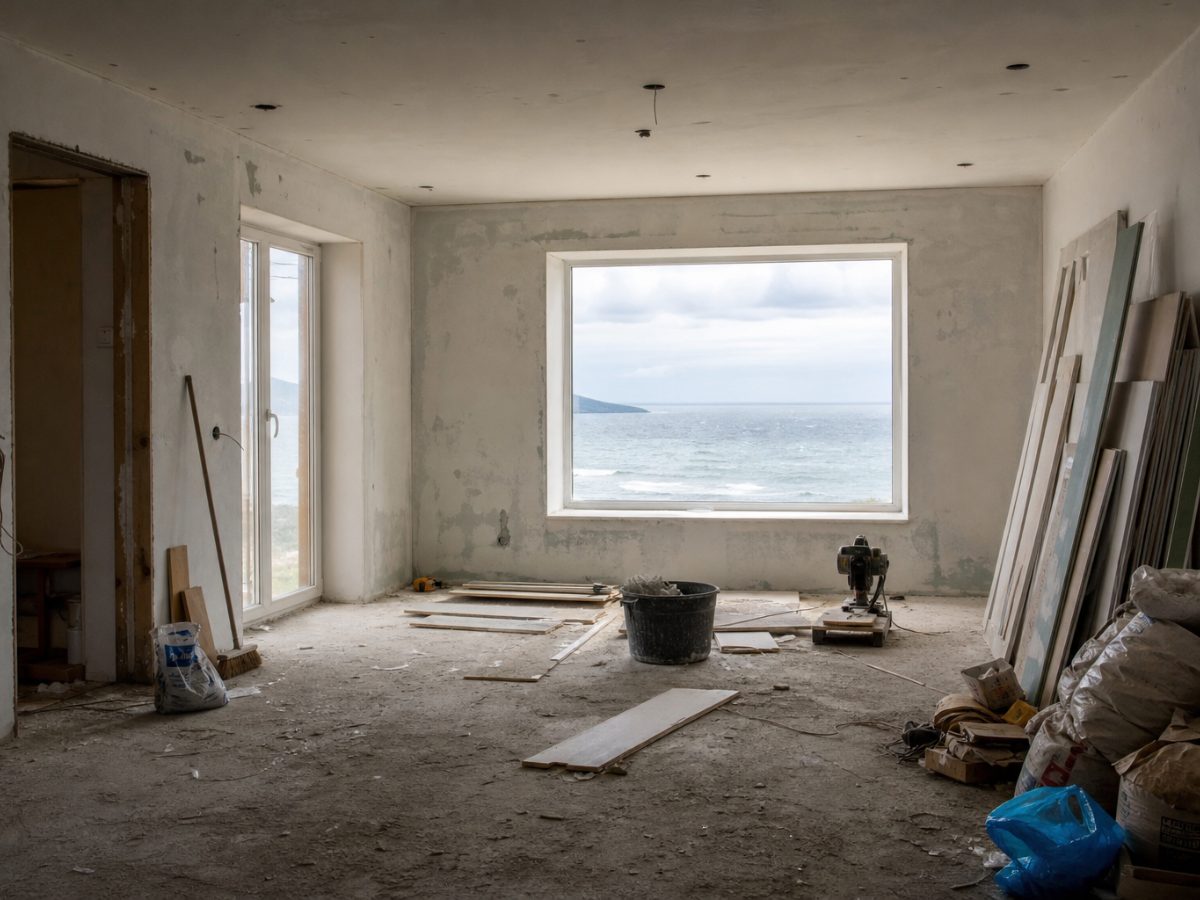
We bought a three-bedroom semi-detached in north County Dublin that needed everything done. New roof, rewire, full replumb, kitchen extension, insulation, bathrooms, the lot. I was working in IT at the time, I'd managed complex projects professionally for years, and I genuinely believed that gave me an edge. I had spreadsheets. I had timelines. I had a WhatsApp group for every trade.
Eighteen months later, I had grey hair I hadn't earned and a renovation that cost roughly thirty percent more than it should have. Not because the trades were bad. Because I had no idea what I was actually doing.
What I thought project managing a renovation meant
I thought it meant keeping a schedule, paying invoices on time and making decisions quickly. That part I could do. What I didn't understand was everything underneath that: the sequencing logic that experienced people carry in their heads without thinking about it, the supplier relationships that get you materials when there's a shortage, the ability to walk onto a site and immediately know whether the work done yesterday is going to cause a problem in six weeks.
I didn't have any of that. I was reading about it on forums the night before I needed to use it in the morning.
The mistakes that actually cost money
The first big one was sequencing. I let the plasterers start before the electrician had finished first fix. This sounds like an obvious mistake in hindsight. It wasn't obvious to me at the time because the electrician told me he was "nearly done" and the plasterers had a gap in their schedule. I didn't want to lose them. So I let them crack on. Two weeks later, the electrician needed to chase back through freshly plastered walls in four rooms. The replastering cost me just under two thousand euro and set the whole job back by three weeks.
The second mistake was not understanding what I was reading. I'd been given a quantity surveyor's report on the structural work and I nodded along with it without really knowing what I was agreeing to. There's a reason people say you should read a quantity surveyor's report carefully before you sign anything. The provisional sums in mine became the source of almost every cost overrun that followed.
The third mistake, and the one that stings most, was vetting trades on feel rather than process. I gave work to a plumber based on a neighbour's recommendation and a good first impression. He was genuinely likeable. He was also unavailable for six weeks mid-job with no explanation and left the upstairs bathroom rough-in in a state that another plumber had to fix. I now know there's a proper way to vet a tradesperson in Ireland that goes well beyond asking around.
What changed when we brought in a project manager
We were about halfway through the job when my wife sat me down and said something had to change. I was taking calls during work meetings, I was spending every weekend on site, and I was making decisions under pressure that I didn't have the knowledge to make properly. We found a project manager through an architect friend who vouched for her personally.
The fee was four percent of the remaining build cost. I nearly choked on it. I paid it anyway.
Within the first week she had renegotiated the joinery timeline, identified a problem with the flat roof specification that would have caused water ingress inside two years, and found us a kitchen fitter who was thirty percent cheaper than the one I'd lined up. She also spotted that the builder had priced a partition wall in the wrong location. That would have meant moving it later at our expense.
The four percent paid for itself before the end of her first month on site.
What I'd do differently from the start
I'd bring in a project manager before a single trade was engaged. Not after the damage was done. The value isn't just in crisis management. It's in the decisions you never have to undo because they were right the first time.
I'd also be more honest with myself about what I know and what I only think I know. Managing a software rollout and managing a whole-house renovation are not the same skill. The tools look similar from a distance. Up close, they are completely different.
If you're heading into something like this, especially an older house with a long list of trades involved, at least have a conversation with a project manager before you commit to doing it yourself. Ask them what they'd look for on a job like yours. That conversation alone will show you how much you don't know yet.