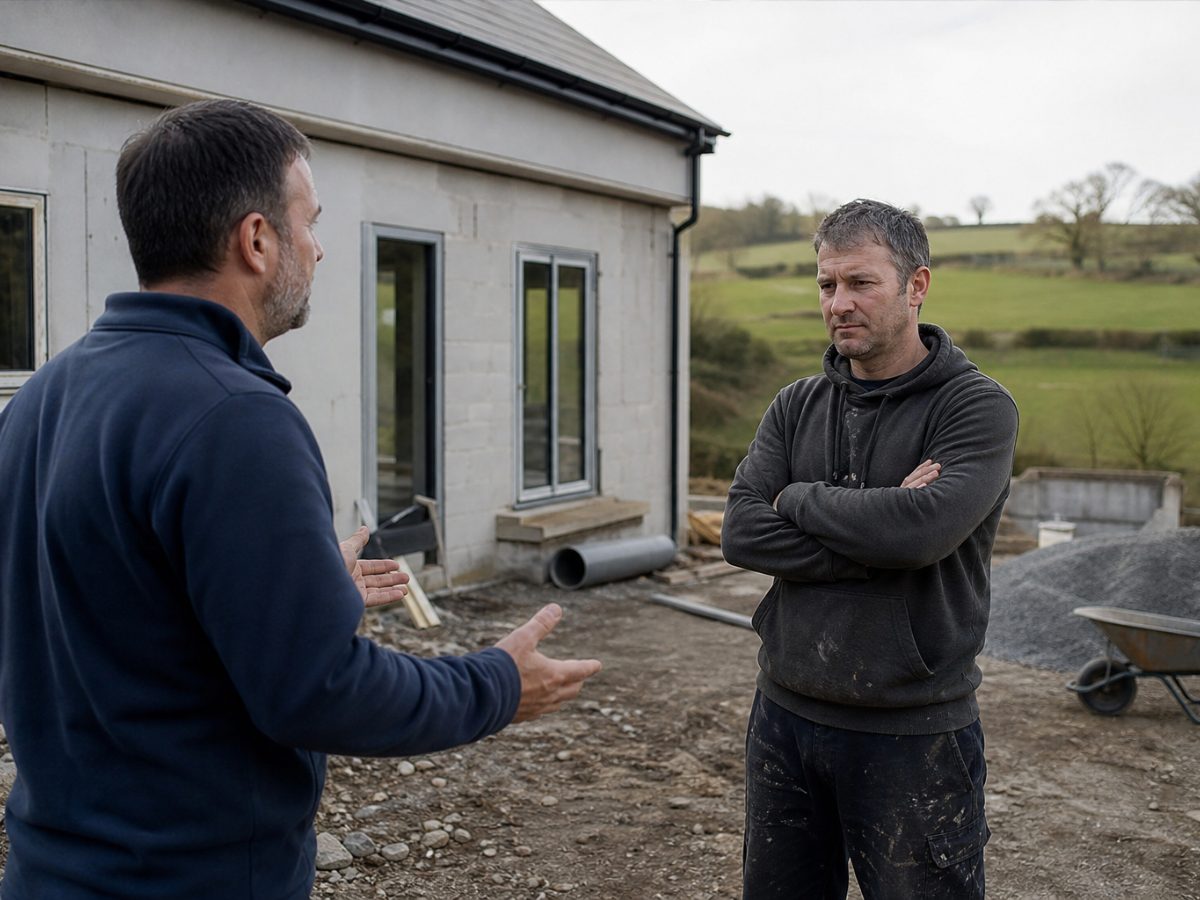
We shook hands on it. That was the agreement. Our builder seemed solid, he'd done work for a neighbour, he turned up on time to quote, and he gave us a number we were happy with. So when he said he didn't really bother with formal contracts, we went along with it. We were nervous about seeming difficult. We wanted to keep things friendly. That was our first mistake, and it cost us more than we'd like to admit.
The extension was supposed to take twelve weeks. It took just over seven months. The original price was around €38,000. We ended up paying closer to €51,000, and even that figure came after a row that nearly ended in solicitors. Here is what actually went wrong, and what we'd do differently.
Where things started to fall apart
The first problem appeared about three weeks in, when the builder told us the groundworks were more involved than he'd expected. Fair enough, that can happen. But because nothing was written down, there was no agreed process for how variations like that would be handled. He gave us a verbal figure, we said yes because we felt we had no choice, and from that point on the project ran on an honour system that only one of us seemed to be taking seriously.
By month two, he was on site maybe three days a week. When we asked about it, he said he had other jobs on and that this was normal. Maybe it is. But again, nothing in writing said otherwise. No agreed schedule, no milestones, no penalty for delays. Just a vague understanding that he'd get it done.
The disputes that followed were exhausting. He said he'd quoted for certain windows. We said those windows were included in the original price. He said they weren't. Neither of us could prove anything. We ended up splitting the cost difference just to move things along, which felt deeply unfair but seemed better than stopping the job halfway through with a roofless extension sitting off the back of the house.
What a proper contract should actually include
We know now, painfully, what we should have had in place before he lifted a single block. A written contract doesn't have to be a legal document the size of a phone book. A clear, signed agreement covering the following basics would have saved us months of stress.
- A full written scope of works. Every material, every finish, every item included. If the windows are in, they're named. If something is excluded, that's stated too.
- A fixed price or a clearly defined basis for variations. If the price can change, there needs to be an agreed process: written quotes for extras, signed approval before work starts, not a conversation on a Tuesday morning.
- A payment schedule tied to progress, not to dates. You pay when the foundations are poured, when the walls are up, when the roof is on. Not every second Friday regardless of what's been done.
- A timeline with agreed milestones. Not just a start date and an estimated finish. Actual checkpoints so you know if you're falling behind before it becomes a seven-month problem.
- A retention clause. Hold back a percentage, typically around five percent, until the job is fully complete and snagging is signed off. It gives you real leverage at the end.
- A dispute resolution process. Even something simple. If you disagree, you both agree to bring in an independent assessor before either party goes to a solicitor.
What we'd tell anyone starting out
Before you get to contracts, you need to be confident in the person you're hiring. Properly vetting a tradesperson in Ireland takes more than checking if they've done work on your road. References, tax compliance, insurance, the lot. We skipped some of that because we were in a hurry and because our neighbour vouched for him. A neighbour's recommendation is a starting point, not a finish line.
If the numbers on a project are significant, and an extension usually is, it is worth having a quantity surveyor look at the quote before you agree to anything. Understanding a quantity surveyor's report before you sign means you go into the project with real clarity on what the price actually covers.
Our builder wasn't a bad person. I don't think he set out to take advantage of us. But without anything in writing, every disagreement came down to memory and goodwill, and neither of those holds up well under pressure.