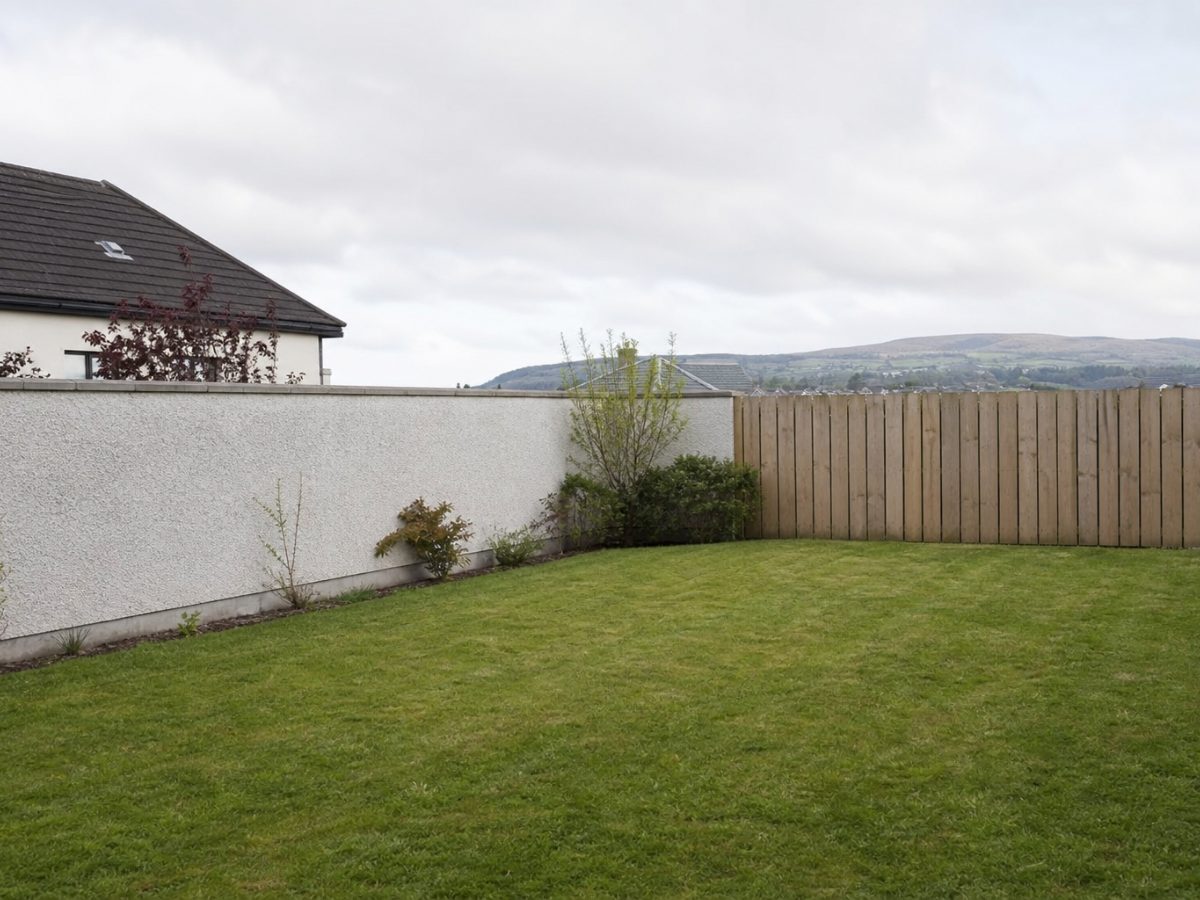
There's a point in most back garden projects where you have to decide what goes around the edge of it. A solid masonry wall or a close-board timber fence. Both do the job of giving you privacy and marking the boundary. But they behave very differently over time, especially in the Irish climate, and the choice you make now will affect your garden and your wallet for years.
What each option actually involves
A garden wall, typically block built and rendered or faced in brick or stone, is a permanent structure. A good one, properly built on a suitable footing, can last decades without much attention beyond the odd coat of masonry paint or some repointing. It handles the wet, the frost and the wind about as well as anything can.
Close-board fencing is vertical overlapping feather-edge boards fixed to horizontal rails and concrete or timber posts. It's the standard go-to for Irish back gardens, and there's a reason for that. It goes up quickly, costs less upfront, and looks well when it's new.
Cost: the gap is significant
A close-board fence will typically cost somewhere in the region of a third to half the price of a block wall for the same run of boundary. Materials are cheaper, the labour is faster, and you don't need a foundation. For a typical suburban garden, you might be looking at a few thousand euro for fencing versus considerably more for a full masonry wall, depending on height and finish.
That said, timber needs replacing. In Ireland's damp climate, even treated timber fence panels can start to rot at the base within ten to fifteen years, sometimes sooner if drainage around the posts is poor. A wall built properly will outlast several rounds of fencing.
Planning considerations
For most rear garden boundaries, you won't need planning permission for either option provided you stay within standard height limits, usually up to two metres at the rear. Things get more complicated at the front of a property or along a road boundary, where limits drop. If your garden backs onto a public road or you're in an estate with specific conditions attached to the original planning, it's worth checking before you build anything. The post on what planning permission actually covers when you are extending in Ireland gives a broader picture of how these rules tend to work in practice.
Maintenance over time
A masonry wall needs almost nothing for long stretches. If it's rendered, the render can crack and let in water, so keeping an eye on that matters. If it's block and painted, you'll repaint every several years. A fence needs more regular attention. Posts rot at ground level. Boards warp. Panels get taken out by a bad storm. After a particularly rough winter, it's not uncommon to look out the back and find a section has come down entirely.
If you do go with timber, pressure-treated posts set in concrete give you the best chance of longevity. Gravel boards along the base, keeping the timber off the soil, make a real difference too.
Which one to choose
If budget is the main concern and you need the boundary sorted quickly, close-board fencing is the practical answer for most gardens. If you're planning to stay in the house long term, a wall will likely cost you less over twenty years when you factor in maintenance and replacement. For a shared boundary, it's also worth having a conversation with the neighbour before you build anything. That part people often leave too late.