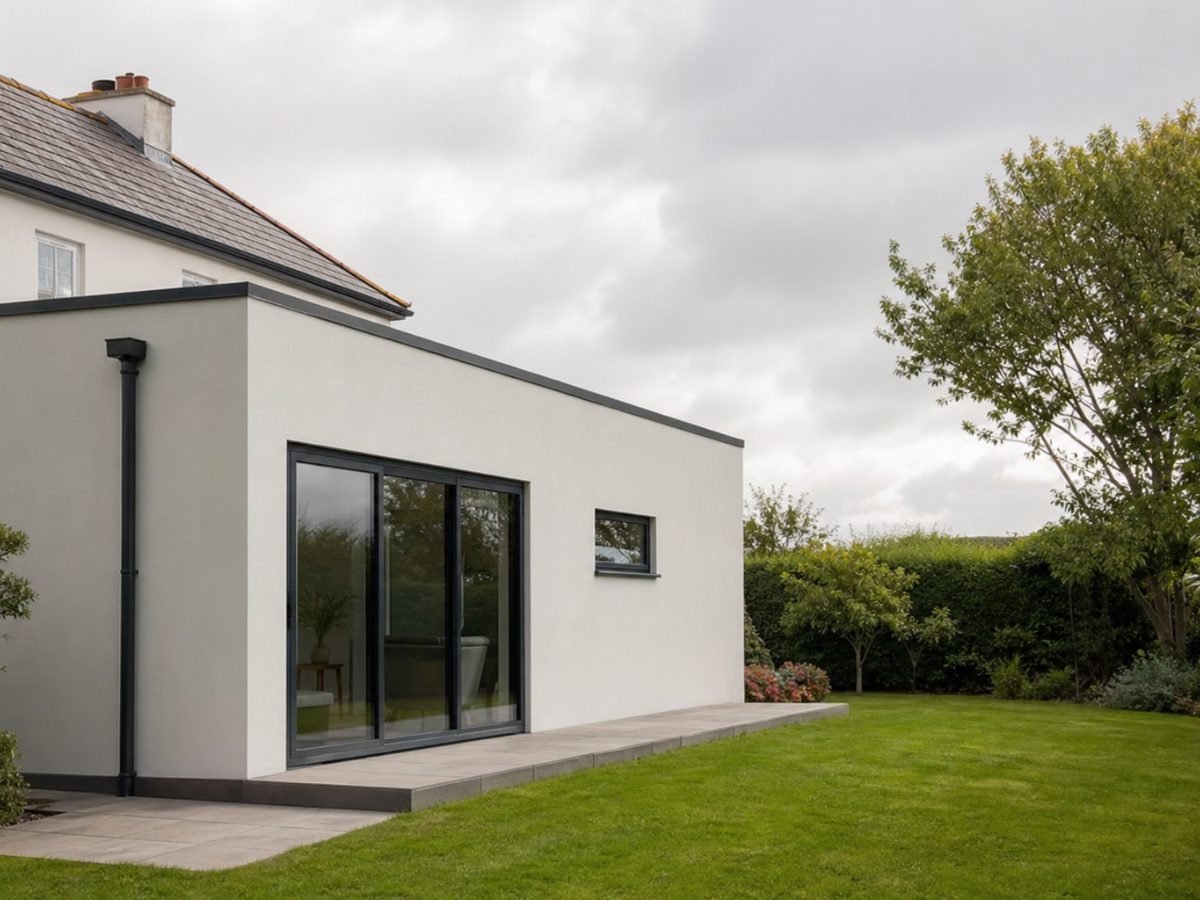
If you're planning a rear extension, one of the first decisions you'll face is the roof. Flat or pitched. It sounds like a simple choice but it affects your budget, your planning application, how long the roof lasts, and what a buyer thinks of the house years down the line. Here's how the two options actually stack up in the Irish context.
Cost
Flat roofs are cheaper to build. That's the main reason they're popular on extensions. A straightforward flat roof on a typical single-storey rear extension will come in noticeably less than a pitched equivalent, partly because the structure is simpler and partly because it needs less material. The savings can be meaningful, often a few thousand euro depending on the size and the finish you choose.
A pitched roof costs more upfront because you need a proper timber or steel frame, tiles or slates, and more labour. If you're already working with a tight budget, that gap matters. That said, if you're getting quotes that feel unpredictable, it's worth understanding how to read a quantity surveyor's report before you sign anything, because the real cost of a pitched roof often only becomes clear once the spec is fully detailed.
Planning implications
Most single-storey rear extensions in Ireland fall under exempted development, which means no planning permission required, as long as you stay within the size limits and don't exceed a certain height. This is where flat roofs have a practical edge. They sit lower, so they're less likely to push you over the height threshold or cause issues with overlooking a neighbour's garden.
A pitched roof adds height, and depending on your site, that can tip you into needing full planning permission. It's not always a problem, but it does slow things down and adds cost. If your plot is tight or you're in a terrace where neighbours are close, a flat roof keeps things simpler from a planning perspective. Always check the current exempted development rules with your local authority or a good architect before you assume you're exempt.
How they hold up in Irish weather
This is where flat roofs get a bad reputation, and some of it is deserved. Older felt flat roofs were notoriously prone to ponding water, cracking and leaking, often within ten to fifteen years. Ireland's rainfall doesn't forgive a poorly installed flat roof.
Modern flat roofs are a different story. EPDM rubber membranes and GRP fibreglass systems have transformed the product. A well-installed EPDM roof, for example, can last thirty or forty years with almost no maintenance. The key word is well-installed. A flat roof done cheaply by someone who cuts corners will let you down. A pitched roof with proper felt, battens, and good quality slates will last longer still, potentially sixty or seventy years, and it sheds water by design. In a country that gets as much rain as ours, that natural drainage is a genuine advantage.
If you're adding a kitchen or living space to the back of the house and want to stop thinking about the roof completely, a pitched roof gives you more peace of mind over the long term.
Resale impact
This one is harder to quantify but worth considering. Most buyers don't immediately distrust a flat roof, but a surveyor will flag it in a report and buyers will ask about its age and condition. An older flat roof on an extension is a negotiating point, fairly or not. A pitched roof with slates tends to read as more permanent and more in keeping with the original house, which can make the extension feel less like an add-on and more like part of the property.
If you're extending a period home or a house with strong kerb appeal, that visual consistency matters to buyers and to valuers.
So which one?
If budget is the deciding factor and you use a quality modern membrane, a flat roof is a perfectly reasonable choice. If you're extending to stay in the house long-term and want the lowest possible maintenance, the extra cost of a pitched roof is usually worth it. The roof you regret is the one that was cheap at the time and expensive ever after.