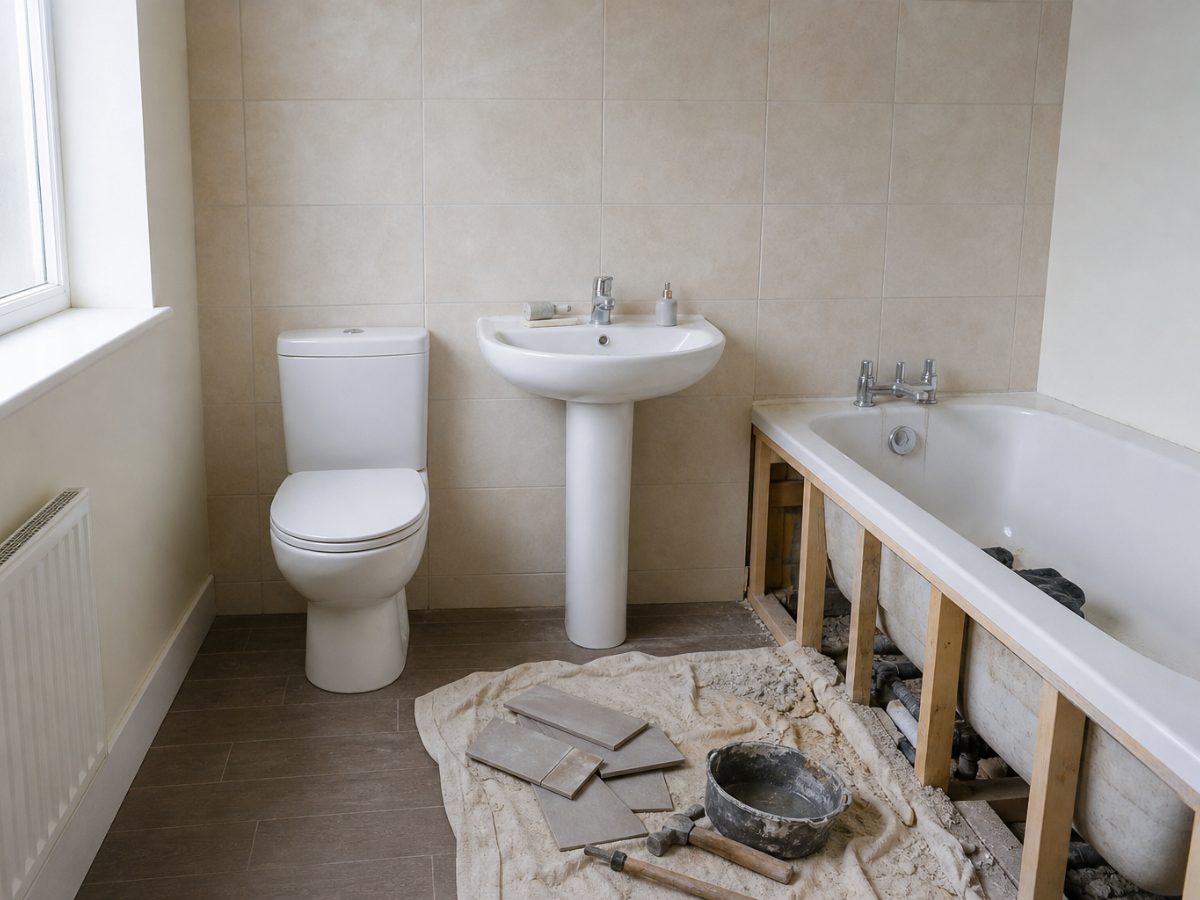
A bathroom refit is one of the most popular projects Irish homeowners take on, and for good reason. It's relatively contained, it adds genuine comfort to daily life, and done well it can lift the value of a property. Done badly on a tight budget, though, it becomes one of the most expensive rooms in the house, just not in the way you planned. Here are five mistakes worth avoiding before you spend a cent.
1. Skimping on the waterproofing to save a few hundred euro
This is the big one. Tanking, waterproof membranes, proper silicone joints at junctions. These are not optional extras you can skip to bring the quote down. Water finds every gap, and in an Irish bathroom with steam from daily showers and a damp climate outside, it will find it quickly. The results are never dramatic at first. You get a bit of grout going black, a soft patch behind the tiles, maybe a damp smell. By the time you notice something is wrong, the damage is usually into the wall framing or the floor structure. Fixing it costs multiples of what the proper waterproofing would have cost in the first place.
2. Choosing the cheapest tiles without thinking about the full cost
Cheap tiles are not always bad value. The problem is people buy bargain tiles and then pay full rates for a tiler to lay them. Discount tiles are often harder to cut, less consistent in size, and more prone to cracking during fixing. Your tiler ends up spending more time on the job, and you often end up needing more tiles to cover the waste. A mid-range tile from a decent supplier is usually the better call. Save money on things the tiler does not need to fight with.
3. Not budgeting for what is behind the wall
Plenty of bathrooms in Irish homes, especially in houses built from the 1960s through to the 1990s, have surprises once you start stripping out. Corroded pipe work, substandard electrical runs, plasterboard that was never right for a wet room, old soil pipes with joints that should have been replaced twenty years ago. A budget refit assumes none of this. When something turns up, and it very often does, there is no contingency and the whole job stalls. Allow ten to fifteen percent of your total budget for the unexpected. It is not pessimism, it is just how bathrooms work.
4. Hiring on price alone
Getting multiple quotes is sensible. Automatically going with the lowest is not. A bathroom involves at least two trades, usually a plumber and a tiler, sometimes an electrician too. If one of them cuts their quote by going fast or skipping prep, you carry the consequences long after they are gone. Properly vetting a trades person before you hire them takes a bit of time but it protects you far more than squeezing the quote does. Check their previous work, talk to someone they have worked for before, and make sure whatever is agreed is written down clearly.
5. Treating ventilation as an afterthought
A bathroom without adequate ventilation in Ireland is a mould factory. It is that simple. The combination of our humidity levels and the sealed, insulated homes built in recent decades means that an underpowered or badly positioned extractor fan just does not do the job. If your bathroom has no window, or a window that rarely gets opened, you need a proper extractor rated for the room size, ducted to outside. Not into a wall cavity. Not into a roof space. Outside. It costs a small amount more to do properly and saves you repainting, re-grouting and dealing with air quality problems for as long as you own the house.
Most of these mistakes come down to the same thing: spending money on what you can see and hoping the rest takes care of itself. It never does. Get the hidden work right and the visible stuff will still look good in ten years.