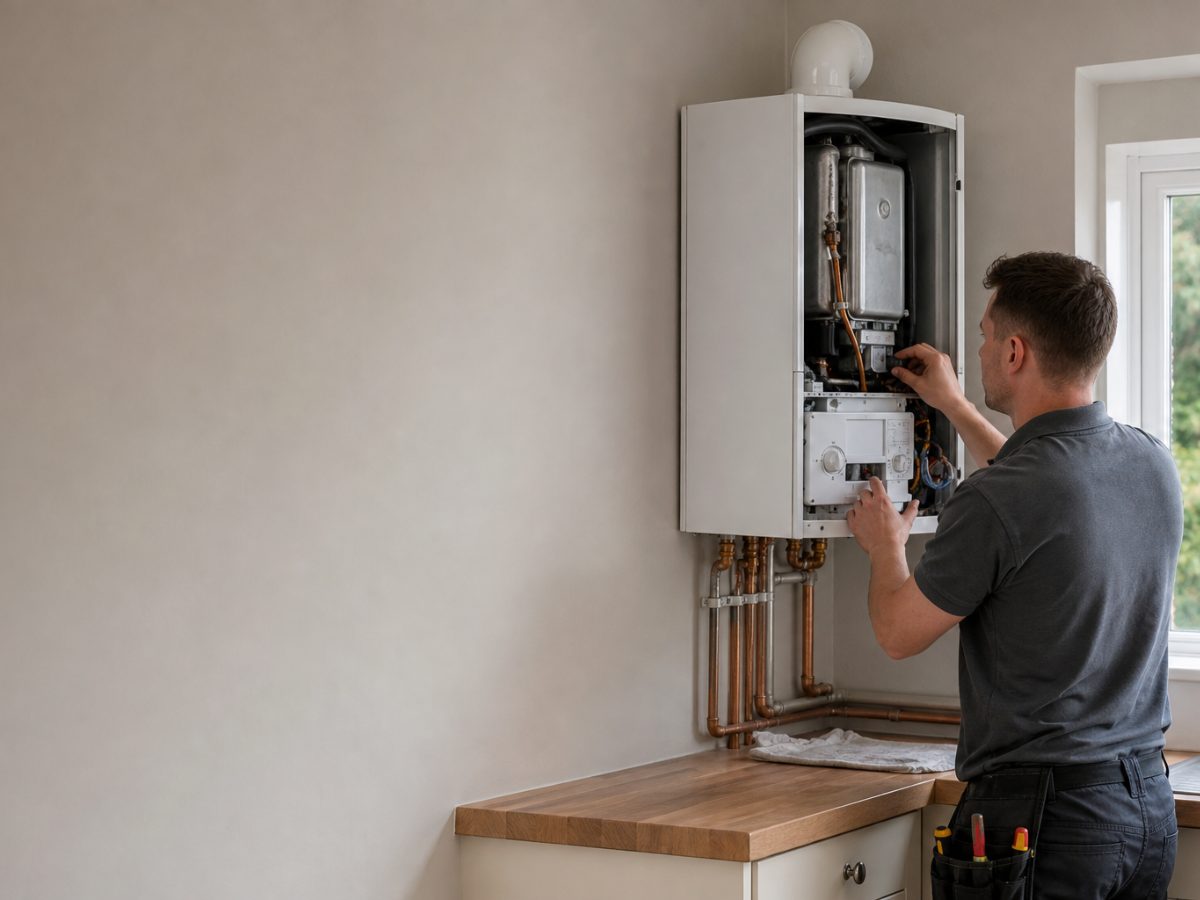
Getting a new combi boiler fitted is one of those jobs most Irish homeowners face eventually. The old boiler starts losing pressure every other week, the engineer sighs and shakes his head, and suddenly you're pricing replacements. But the quotes can vary wildly, and it's hard to know what's reasonable and what's someone taking advantage of your urgency in January.
Here's what the numbers actually look like right now, based on the kind of quotes people are getting across the country.
What does the boiler itself cost?
The unit is usually the single biggest line item. A decent mid-range combi boiler from a reputable brand will typically run somewhere between €900 and €1,400 supply-only. Budget models exist below that, but plumbers often won't warranty their labour on them, which tells you something. High-end units with longer warranties and better efficiency ratings can push past €1,800 before anyone has picked up a spanner.
The output rating matters here too. A standard three-bed semi needs something in the 24 to 30kW range. Bigger homes or houses with multiple bathrooms may need a 35kW unit, which costs more.
What does the labour cost?
A like-for-like swap, meaning the new boiler goes in roughly the same position as the old one, typically runs between €400 and €700 in labour alone. That's assuming no major pipe reconfiguration, no new flue routing through a tricky wall, and no unexpected horrors behind the airing cupboard door.
Dublin tends to sit at the higher end of that range or above it. Rural areas and smaller towns in the midlands or west often come in a bit lower, though the gap has narrowed over the last few years as demand for qualified heating engineers has stayed high everywhere.
So what's the all-in cost for a standard swap-out?
For a straightforward replacement in a typical Irish semi-detached, you're realistically looking at €1,400 to €2,200 all in. That covers the boiler, labour, a new thermostat or programmer if needed, and the standard system flush and commission. Call it €1,600 to €1,800 as a rough middle ground for most jobs in most parts of the country.
If the quote you've received is well under €1,200 total, it's worth asking exactly what's included. A very low quote sometimes means a budget unit, no system flush, or labour that doesn't cover callouts if something goes wrong in the first few months.
What pushes the price up?
A few things add cost fast. Moving the boiler to a different location means new pipework and a new flue run, which can add €300 to €600 depending on the complexity. If the existing pipework is old copper in poor condition, a responsible engineer will recommend replacing sections of it. A power flush on a system with heavy sludge buildup is typically €200 to €400 extra but is often worth it, since a new boiler pushing dirty water around an old system will fail sooner.
Upgrading to a smart thermostat at the same time adds €100 to €250 depending on the model. Some plumbers include a basic programmer in their quote as standard. Check before you assume.
How do you know if a quote is fair?
Get at least three written quotes that break down the boiler model, labour, and any extras separately. A quote that just says "supply and fit combi boiler: €1,500" tells you almost nothing. You want to know the exact model number so you can price the unit yourself, the expected day rate or fixed labour charge, what the warranty covers and who handles callouts.
Vetting the person doing the work matters as much as the number on the quote. A plumber should be registered with the RGII (Register of Gas Installers of Ireland) for any gas work. That's not optional. If you're unsure how to go beyond the quote and actually check who you're hiring, properly vetting a tradesperson in Ireland is worth reading before you commit to anyone.
The boiler itself will likely outlast several bad installations, so the person fitting it is not a place to cut corners.